TRI Talk #3 Showcases How Disulfide Bonds in Hair Fibers Can Be Quantified Using Light

Updated: Dec 17, 2025
DR LARRY SENAK WILL PRESENT ON:
Hair Resilience: Advanced Techniques to Evaluate Hair Bonding and Validate Cosmetic Claims
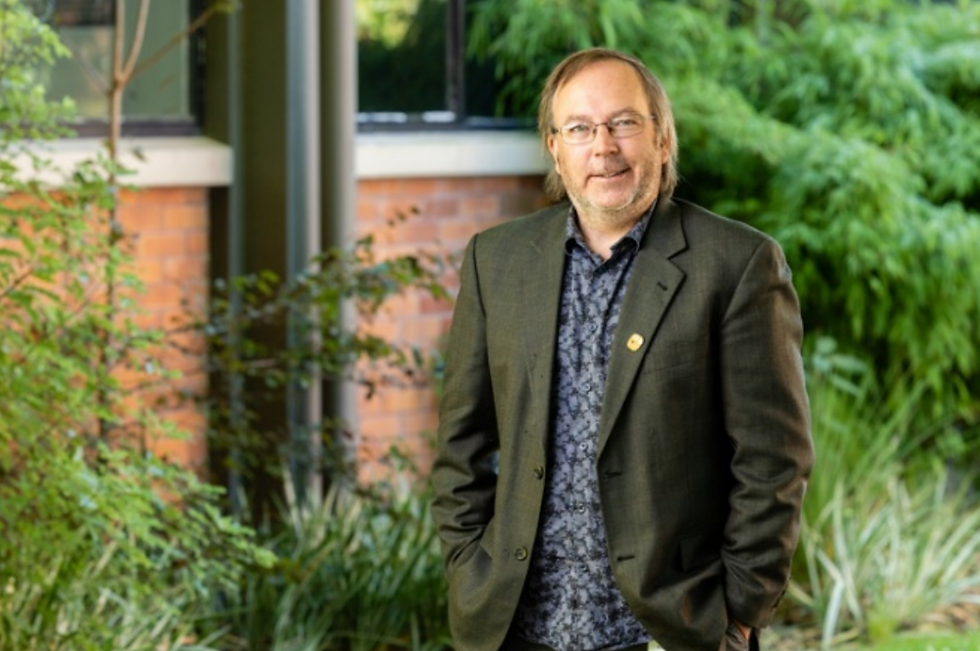
Larry Senak, Principal Scientist at TRI Princeton TRI Talks 2025
The TRI talks are 60-minute on-line seminars on a wide range of topics designed to both inform and inspire new ways of thinking. The third talk in the series is by Dr. Larry Senak, a Principal Scientist at TRI, and will consider the use of confocal Raman spectroscopy to determine the alterations to disulfides bonds in hair structure after chemical treatments (such as bleaching or relaxing), or thermal treatments (e.g. blow-drying and flat ironing).
It’s well-known that disulfide bonds are critical for hair strength and shape, yet they are vulnerable to damage. Use of confocal Raman spectroscopy can reveal how disulfide bonds throughout the hair fiber are changed after exposure to chemical or thermal treatments. In this work, the Raman spectrum of the hair fiber was measured along the z-axis to a depth of 20 microns. Results showed a marked reduction in the S–S band intensity across all treated samples, indicating significant disulfide bond damage (content and configuration) both at the surface and within the cortex. Chemical treatments were the most damaging, though thermal styling also caused significant detectable bond degradation. Importantly, several rinse-off and leave-in treatments demonstrated measurable repair of disulfide bonds. This study demonstrates that confocal Raman spectroscopy is a powerful tool for assessing hair damage and supports efficacy claims for bond repair and protection products in the hair care industry.